4Eggs News Network
Far from Tokyō, a hanamatsuri finds a home on the Common
Mia Solimine
Japan Festival Boston took place on Boston Common this past weekend, inviting all lovers of Japanese culture to celebrate over two days. The first Japan Festival took place in 2012 to commemorate the 100th anniversary of Washington, D.C., gifting Boston a collection of sakura trees. Japan Festival Boston currently holds the title of the largest Japanese festival on the East Coast.
In Japan, cherry blossom trees, or sakura, are culturally significant and are associated with the tradition of hanami, or “flower viewing.” This tradition recognizes the fleeting beauty of cherry blossoms, which symbolize the ephemeral nature of life and renewal.
Festivals are also an important part of Japanese culture, though in Japan they are called matsuri. Festivals are held frequently to honor Shintō deities, maintain community bonds and bring Japanese people together. Japan Festival Boston mimics the proceedings of a traditional hanamatsuri, or “flower festival.”
As everyone gathered around the main stage for a calligraphy performance by Hiroko Watanabe, 7-year-old Maya, wearing a bright red yukata, stood with her mother. A yukata is a casual Japanese garment traditionally made of cotton and worn primarily in summer.
She spoke in Japanese, saying the yukata was made by her great-grandmother on her mother’s side, who had just turned 100. She added that she looks forward to the festival every year because she can wear her yukata and eat bowls of Japanese food.

Sakura flowers bloom on a tree during a cloudy day in the Common (Photos by Mia Solimine).


A vendor sells Japanese fans that he designed. Some patterns are traditional, and others are modern.
A man prays at a makeshift shrine.
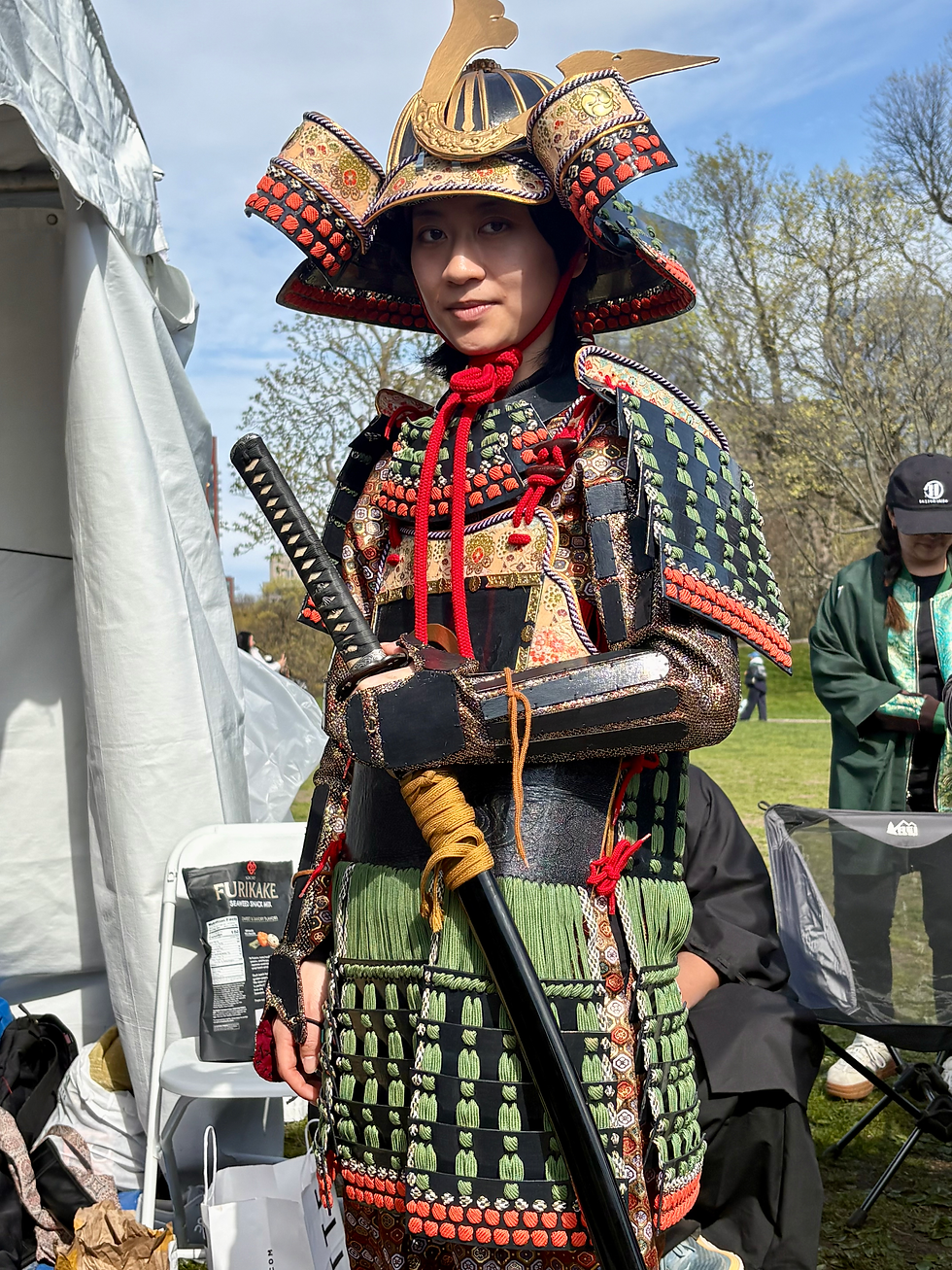
A student at Boston Iaido school poses with their Japanese katana.
Mimika and Utano, two Japanese students at Boston University volunteering for the festival, were excited to talk about why they both love the annual matsuri.
“Well, I mean, it’s my culture, so I always want to share,” Mimika said. “And then I think it’s also a place where my friends can connect because we go to different schools, but then I run into all my friends, and I'm like, ‘hi!’”
In between taking orders at the gyoza line, Utano noted, “It’s my culture as well, which I’m happy and proud of! And also, I’ve met Japanese people on campus at BU, but also I feel like this place is a little different because I’ve never seen so many Japanese people all come together … as I’m taking orders, I get to learn about other people’s culture because they’ll ask something about my culture and then I'll ask about their culture.”
On the grass near one of the booths selling kimono and yukata sets, Melissa sat in her own kimono. “I am a quarter Japanese on my mother’s side. My grandfather was Japanese, although he did live in Peru,” Melissa said, holding her 2-year-old daughter, also wearing a kimono. “It's nice to see people that are in the booths, when they come in with their companies and homemade items and really embracing the Japanese culture; seeing people that really like to take pictures and enjoy the entertainment that’s going on – it's really nice to see.”
Stalls lined up along Boston Common, selling homemade Japanese products and merchandise related to Japanese culture, such as anime figurines or keychains. Some booths also offered educational services, including seminars on how to wear a yukata respectfully and basic Japanese language courses.
Jeff and Miho of the North Shore Japanese Language and Culture School, located in downtown Salem, advertised their courses to prospective students at one of the tents.
Miho eyed the main stage, where Michiko Kurata was putting on a traditional flute and dance performance. “We’ve barely left the booth, so I’ve missed everything outside of my booth … but being able to meet new people and meet my former students and some people, you know, visited me and stopped by – that’s the best thing about matsuri.”


A mannequin displays a yukata and matching samurai pants.
A group of Japanese children, their parents, and volunteers carry the mikoshi, a mini shrine believed to house a deity.